

The General Directorate of National Security welcomed a high-level official delegation from the Federal Bureau of Investigation (FBI) during an official visit to the Kingdom of Morocco from January 4 to 6, aimed at reviewing the security and public-safety protocols implemented for the finals of the Africa Cup of Nations (AFCON) 2025.
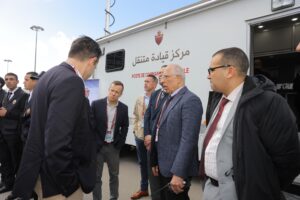
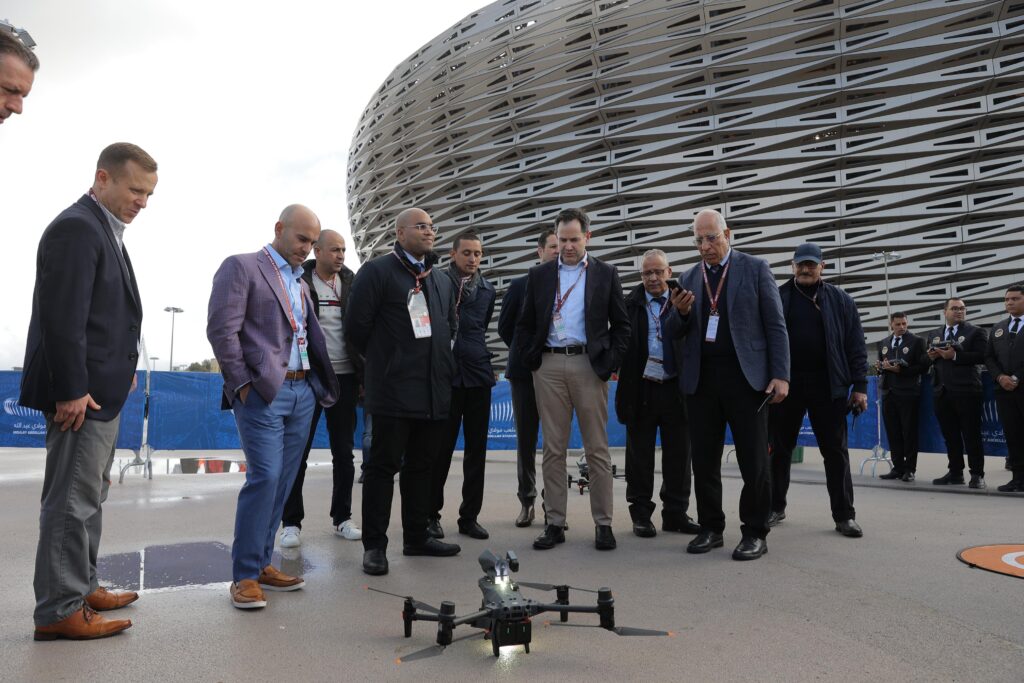
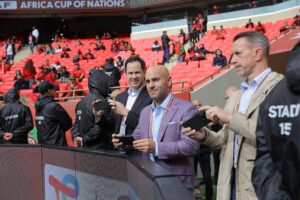
The U.S. delegation is led by Douglas Olsen, Director of Operations at the Field Intervention Services Division, and Kevin Kowalski, Deputy Director of the Emergency Response Group. The visit began with an on-site inspection of the security system in place at the Prince Moulay Abdellah Stadium in Rabat, on the sidelines of the Morocco–Tanzania match. The delegation examined the deployment of security teams, levels of access control, the use of drones and high-definition surveillance cameras, as well as electronic coordination mechanisms through fixed and mobile command centers.
The delegation also visited the African Security Cooperation Center, which serves as a liaison platform between Moroccan security services and police officers representing the African countries participating in the tournament. FBI representatives were briefed on the center’s operating procedures and advanced technical and logistical capabilities, and took part in a working session to assess the security arrangements for the Morocco–Tanzania match.
The program is expected to continue with a visit to the Moulay Hassan Stadium in Rabat to review another facet of the security measures accompanying the Algeria–Democratic Republic of the Congo match, particularly the process of securing the entry of foreign supporters and the operational coordination between national police services and foreign police officers, including on-site “spotters.”
This visit reflects the U.S. side’s interest in learning from the Moroccan model for securing major sporting events, especially as the United States prepares to host the FIFA World Cup 2026, which requires the establishment of an international security cooperation center in line with the regulations of the Fédération Internationale de Football Association. It also underscores the shared commitment of Morocco and the United States to strengthen bilateral security cooperation through the exchange of operational expertise—particularly in risk assessment, emergency response, and the use of technology in security—within the broader context of preparations for the 2026 and 2030 World Cups.